
By Owolola Adebola
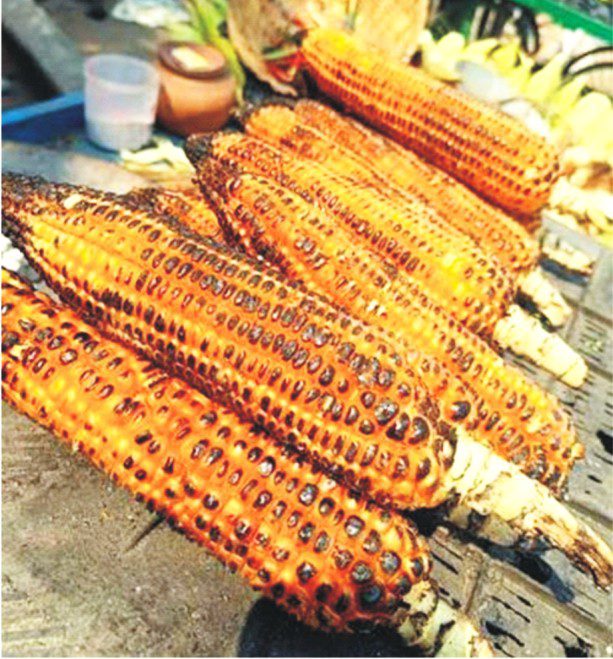
This is a season for corn eating, popularly known as mouth organ. Along highways and village paths, at street corners and market entrances, smoke curls lazily into the sky from charcoal fires. Women sit patiently beside glowing embers, turning golden ears of corn with practised hands. The aroma travels far beyond the roadside, beckoning travellers, workers, students and passersby.
The expression “mouth organ” may sound amusing, but it perfectly captures the experience of eating fresh corn. As the teeth move rhythmically across rows of kernels, they produce a pattern of movement that resembles the playing of a musical instrument. The mouth becomes an orchestra, the corn cob a keyboard and every bite a note in a song composed by nature itself.
For many people, the arrival of fresh corn is one of the most anticipated moments of the rainy season. It announces that the earth has once again responded to the labour of farmers. It tells a story of seeds buried in faith and harvested in hope. The appearance of corn on roadsides and in markets is not merely a commercial event; it is a cultural celebration, a seasonal ritual that binds communities together.
Corn has occupied a special place in human history for centuries. It is one of the world’s most cultivated crops and one of the most versatile. It can be boiled, roasted, ground into flour, processed into pap, transformed into snacks and used in countless recipes. Yet, there is something magical about fresh corn eaten directly from the cob. It retains the taste of the soil, the freshness of the rain and the sweetness of the season.
Across Nigeria and many parts of Africa, roasted corn and pear form an inseparable partnership. The sight of yellow corn beside dark-green pears has become a symbol of the rainy season. One is warm and slightly smoky; the other is soft and creamy. Together, they create a culinary harmony that few delicacies can rival. Their marriage on the roadside is a reminder that simplicity often produces the most satisfying pleasures.
The corn season is also a season of memories. For many adults, the smell of roasting corn is enough to transport them back to childhood. It recalls days spent on family farms, afternoons under mango trees and evenings gathered around open fires. It evokes memories of laughter shared among siblings, stories told by grandparents and the excitement of harvesting the first ears from the farm.
In those days, corn was more than food. It was an event. Families looked forward to the first harvest. Children competed to select the biggest cobs. Neighbours exchanged portions of their harvests. Eating corn became a communal experience that reinforced social bonds and reminded everyone that abundance is sweetest when shared.
Even in modern cities, where concrete often replaces farmland, the arrival of fresh corn continues to create a sense of excitement. Office workers stop at roadside stands after work. Motorists pull over to make quick purchases. Street vendors become temporary ambassadors of the season. For a few weeks, urban life slows down just enough to accommodate this humble agricultural celebration.
The economic significance of the season is not to be overlooked. Behind every roasted cob lies a chain of livelihoods. Farmers cultivate the crop. Labourers assist with planting and harvesting. Transporters move produce from farms to markets. Traders buy and sell. Vendors roast and retail. The corn economy, though seasonal, provides income for thousands of households.
For farmers especially, the harvest represents the culmination of months of hard work. Agriculture is not merely an occupation; it is an act of faith. The farmer plants without certainty. He relies on rainfall, favourable weather, fertile soil and protection from pests. Every harvest is therefore a triumph over uncertainty. Every ear of corn is evidence of perseverance.
Yet the season should also inspire reflection on the challenges confronting agriculture. Despite fertile land and favourable climatic conditions, many farmers continue to struggle with inadequate infrastructure, poor access to credit, rising production costs and insecurity. Rural areas in many areas remain in poor condition, making it difficult to transport produce to markets. Storage facilities are often insufficient, leading to post-harvest losses.
Climate change has further complicated matters. Rainfall patterns are becoming increasingly unpredictable. Droughts occur in regions that once enjoyed reliable precipitation, while floods devastate others. These environmental changes threaten food production and the livelihoods of farming communities. As society celebrates the corn season, it must also acknowledge the need to support those who make the harvest possible.
Nutritionally, corn deserves recognition as more than a seasonal delicacy. It is a valuable source of carbohydrates, providing energy for daily activities. It contains dietary fibre that supports digestion and essential nutrients that contribute to overall health. Fresh corn offers a wholesome alternative to many processed snacks that dominate contemporary diets.
Beyond nutrition and economics lies the deeper symbolism of corn. The crop embodies patience. A seed planted today does not produce a harvest tomorrow. It must pass through stages of growth, endure sunshine and rain, and mature in its own time. In an age obsessed with instant gratification, corn reminds humanity that worthwhile rewards often require waiting.
Corn also teaches resilience. The plant bends in the wind without breaking. It survives changing weather and continues growing toward maturity. There is a lesson in this for individuals and societies alike. Progress is not always immediate, but persistence often yields results.
Perhaps the most remarkable aspect of the corn season is its democratic nature. Corn is enjoyed by people from all walks of life. It is one of the few foods that comfortably crosses social boundaries. The wealthy executive and the roadside mechanic may stand side by side purchasing roasted corn from the same vendor. In that moment, status becomes irrelevant. The pleasure derived from a fresh cob is universal.
This universality explains why corn occupies such a cherished place in collective memory. It connects people to the land, to one another, and to traditions that have endured for generations. Long after expensive meals are forgotten, many people still remember the taste of freshly roasted corn eaten on a rainy afternoon.
The season is also a reminder of nature’s generosity. In a world often dominated by technology and artificiality, fresh corn offers a direct connection to the earth. It emerges from the soil without elaborate processing or packaging. It is a gift presented in its natural form, requiring little more than fire and appetite.
As smoke rises from roasting stands and conversations flourish around them, communities participate in an annual ritual that transcends mere consumption. They celebrate harvest, labour, family, memory and hope. They acknowledge, whether consciously or unconsciously, the intricate relationship between humanity and the natural world.
Indeed, this is a season for corn eating—the season of the mouth organ. It is a season when the earth sings through its harvest, when roadside fires become gathering places and when ordinary moments acquire extraordinary meaning. Every cob tells a story of rain and sunshine, of labour and reward, of patience and fulfilment.
As long as seeds continue to be planted and rain continues to fall, the music of the mouth organ will never cease. It will continue to echo through villages and cities, reminding us that some of life’s greatest joys are found not in luxury, but in the simple, enduring gifts of the earth.