
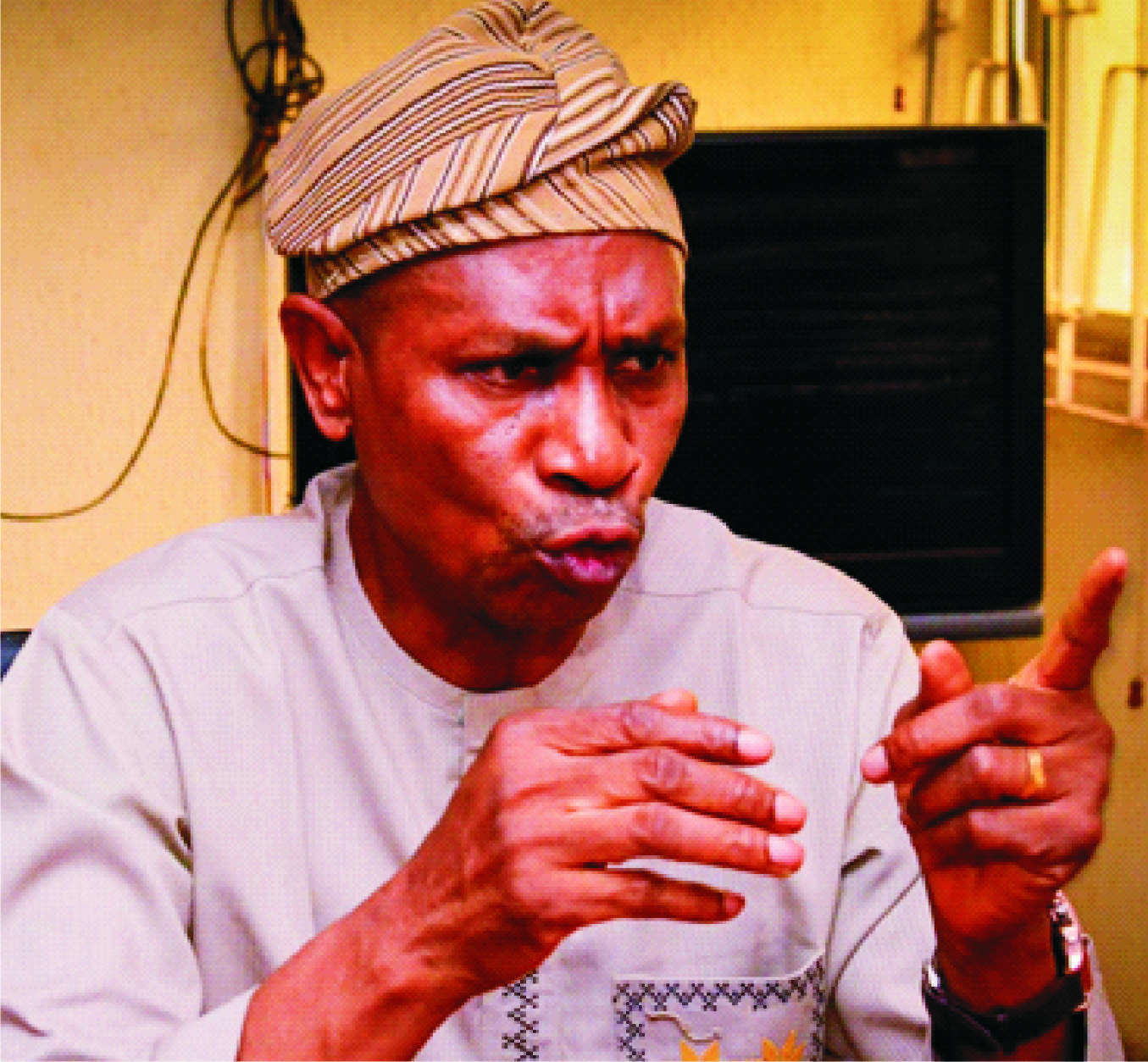
Dr. Thompson Aiyegunle is a Managing Partner at TAC Global Accountants. In this exclusive interview with THE HOPE, he speaks on the importance of the new tax reform, the significance of the Taxes and Levies Act and the current national tax policy, among other sundry issues.
Excerpts:
Briefly share your profile, for the purpose of documentation
I am Dr. Thompson Aiyegunle, the Managing Partner of TAC Global Accountants. I’m a Fellow member of the Institute of Chartered Accountants of Nigeria, Fellow member of the Chartered Institute of Taxation of Nigeria, Fellow member of the Chartered Institute of Forensics and Certified Fraud Investigators of Nigeria, and I’m also a member of the Institute of Management Consultants of Nigeria.
What is your relationship with the state government in terms of tax administration?
Currently, I’m a tax consultant to the Ondo State Internal Revenue Service to see how we can help them increase revenue for the state by carrying out tax audit and back-duty assessments. Back-duty assessment is the extra tax liability imposed after an audit for past periods where taxes were under- paid or not paid at all. We then report so that the money can be recouped back into the coffers of the government.
Common areas where back duty arises for the state are:
i.. Pay As Your Earn (PAYE) deductions
- Withholding Tax (WHT) deductions
So how would you rate the compliance of those who are supposed to pay tax in Ondo State?
Compliance is very low. There are two categories: employers and employees. Employers are the companies that engage staff, including government institutions. So, the onus is on the employer, by virtue of the tax law, to deduct PAYE and remit it to the Ondo State Internal Revenue Service.,
At the end of the activities for example, 2025 the Tax Act mandates that the company or employer to file their tax returns on or before 31st January of the following year. That means the company or employer must have filed by 31st January 2026 concerning 2025 income activities.
However, just as the company or employer files, the Tax Act also maintains that you, as an individual, must file your tax returns. That should be done on or before 31st March of the following year. For example, for 2025 income, you must file your returns on or before 31st March, 2026.
Under the NTA (Nigerian Tax Act) and the reforms that have come, filing has been made easier because you can file your returns online, unlike before when paperwork was used. The reform has made life easier so that you can go online and file your returns. However, the majority of individuals are not doing this.
But with these reforms, we keep encouraging the tax payers that it is your civic responsibility to pay tax and to file your returns.
Even if the law says you are tax-exempt, it does not preclude you from filing your returns. So, the level of compliance in filing is still very low. But we believe that with this reform, it will definitely improve.
Can you let us into the kernel of the new tax reform with a view to enforcing compliance, because you have just said now that compliance is low and once it is low, the population of tax evaders will increase and that also translates to poor socioeconomic development? So, what’s your advice to the government? Tell us something about the new tax reform as a kind of enlightenment to the public?
Thank you very much. The reform came because when you look at the previous tax laws, they were disjointed. The reform is trying to bring every tax law together for easy administration and implementation, and to make life a little better for those in the low-income bracket.
That is why it was stated that if you are earning less or equal to than ₦800,000 per annum, you are tax-exempt. There is also a clause under the minimum wage; if you are under that, you are also tax-exempt, so that there will be an increase in disposable income for low earners.
Most of the reforms are to help reduce costs and make life a little better.
There is a difference between evasion and avoidance. Evasion is criminal in nature. Tax avoidance means taking advantage of a lacuna in the tax law and arranging your affairs in such a manner that your exposure will be limited.
This is a transitional period. The government needs to keep enlightening the people. When you look at social media, the majority of what is being said is not correct.
We need to educate people, and voluntarily, people will comply. Nobody wants to pay tax, but tax is a necessary evil whether we like it or not. It has been imposed by law and we must comply.
My advice is that the government should keep educating and enlightening people over time. At the same time, the government must use the tax collected judiciously so that people can see what it is used for.
People often ask what the government is doing with the money. I say, do your own part and leave the rest. When we pay, we can then ask those in government how they are using our tax. But if you don’t pay, how will you ask? You can’t.
Government should use the tax collected judiciously. Paying salaries is good, but what about those who are not employed by government? If you give them good roads, 24-hour electricity, good security, affordable food and basic healthcare services these are the things people want.
Thank you, Sir. As a kind of addendum, we are talking about the formal sector, that is public servants, the deduction of their tax is statutory. How about the informal sector? I want you to share with us your experience in ensuring compliance with the informal sector. Or is it that your purview doesn’t get to that?
The informal sector is not well organised, but it can be organised. There are different types of taxes. Some companies in the informal sector have a high level of compliance, but many are not in the tax net. The essence of this reform is to bring more people and companies into the tax net.
For the informal sector, as I said earlier, if they see good infrastructure good electricity and good roads voluntarily, they will pay tax.
So, on that premise, how will you rate the performance of Governor Aiyedatiwa since his assumption of office, in terms of infrastructure development which will naturally enthuse taxpayers?
I don’t have any percentage to give the Governor. But from the feelers, I think he is performing to some extent, and I believe he can improve. When I came into town, I saw the traffic light, it was a roundabout before and I was happy. Let them extend the same to my local government, Irekari Communities in Ose Local Government area because I love going to my village but I cannot go owing to the extremely bad road.
Our area contributes to the economy of the state because it is agrarian. We produce cocoa, plantain, cassava, timber and palm trees. Let them implement the approved road projects.
I’m aware that the government has approved the rehabilitation of Afo-Idoani Road for this year budget, let them go and implement it. In advanced countries, people are always ready to pay tax because they see what their governments are doing with the money.
Okay, since you mentioned Idogun and other areas in Ose Local Government area, let’s talk about insecurity and assess how government has been trying to rein in them and your advise on lasting solution?
The information available to me is that the government has taken good steps by deploying security outfits to the area, and there is relative calm.
I discussed with the Local Government Chairman, C.K. Ojo, about setting up security posts to support vigilantes and provide what they need to secure the area. I believe they are trying their best.
How is Nigeria’s tax system structured between the Federal, the State and Local Governments?
Some taxes are collectible by the federal government, some by the state and some by local governments.
Company Income Tax and VAT are paid to the Federal Government. Personal Income Tax is for the states, and residency determines where you pay.
Withholding tax and capital gains tax depend on whether it is an individual or a company, if it is an individual, it will be paid to the state, but if it is a company, it will go to the Federal. But lock-up shop rates belong to local government. Land use charge goes to the state. So, the share depends on who pays.
There are some businesses operating in multiple states. So how does tax jurisdiction affect such companies?
Companies file annual returns with the federal authority which is Nigeria Revenue Service (NRS). Now pertaining to their staff, if a company has head office in Lagos and has a branch in Akure, staff working in Ondo State will pay tax in Ondo, while those working in Lagos will pay in Lagos.
The Joint Tax Board synchronises information among states. Each state has their PID (Personal Identification Digit/ Payer ID). Under the new reforms, systems will be integrated so that if you have paid tax in Lagos, Ondo State will see it.
Anything outside constitutional provisions is extortion. All those people that we are seeing in the market collecting money is not taxation. It is extortion. Tax must go to government coffers, not individuals. With this reform, such extortion will fade out.
What is the difference between tax and rate?
Rating Officers are in the local government. That is part of the areas through which the Local Government can generate revenue. In as much as it is still in the Constitution, it remains a law until it is expunged.
What is the significance of the Taxes and Levies Act?
When you talk about an Act, it is a law that has been passed. When you talk about an edict, it has also been passed. You know we have different levies. We have Acts and edicts; it depends on whether it is federally or state-owned.
We have the Exclusive List. So, they are still laws, but that is the way they have been designed under the law. With this reform, they are being addressed.
Are there some sectors of the Nigerian economy that are under-taxed? Especially the digital aspect?
For the digital economy, the reform and Finance Act have addressed that sector. Residents are taxed on global income. So, if you earn income from abroad while residing in Nigeria, you must declare it.
Can you shed light on the position of this new tax policy on essential goods and bank transactions?
They are under Valued Added Tax (VAT). VAT is a consumption tax. Some services and products are VAT-exempt educational materials, medical services, and basic food items.
There is a difference between VAT zero-rated and VAT-exempt. The reform allows recovery of input VAT in certain cases.
Bank transactions are between you and your bank. Under the bank, we have stamp duty on electronic transfers above certain thresholds defined by law. There is a limit for what will attract this deductions and what should not attract deductions.
So, it is now left for the bank, because even me, I experience it. When I transfer an amount that is less than what the law says, they will still deduct. So, we are hoping that people will take them to court one day. I pray they will change.
What is your view about the current national tax policy in terms of weaknesses and challenges?
There are improvements. Under the new personal income tax bands, someone earning ₦6 million last year and still earning same now will pay less tax compared to the old tax band structure. That is to say that the old tax band is less favourable. Under this new reform the lesser you earn, the lesser you pay but it wasn’t like that before. Statistics show that those who are under the low bracket income even pay higher than those people above. So, under this reform, it is not so.
For small companies, if turnover is less than or equal to ₦100 million with an asset base or equal to or less than N200 million, they are classified as small companies.
There is what we call allowable and disallowable expenses and there are parameters that are being use at the discretion of the tax authority to grant these expenses (Wholly, Exclusively, Reasonably and Necessarily incurred expenses). With this, the tax payer is under the mercy of tax authority to proof these expenses. While under the new tax policy there is a slight change that has brought some improvement in the lives of the tax payers.
I would like you to talk about the tax regime under this administration and how fraud can be eliminated from it.
Compliance is key. If employees submit valid documents rent receipts, pension, life insurance, NHIS and others, they can enjoy tax reliefs. But with what we are doing now, there will be compliance. For example, as an employee, if you carry your rent payment evidence to your HR, is a relief for you as a person and if the other colleague doesn’t present his own, it is not a relief for him. Now, in that your receipt the name of your landlord and other information will be there, it is expected that your landlord will one day also file his returns. So, when he files his return and he doesn’t put the money he received from you as a tenant, under intelligence gathering, they will find out. That is where the essence of that Tax Identification Number (TIN) will come in. As a result of that, more people will come to the tax net, even though they want to escape.
The two of you may be earning the same salary but may not pay the same tax, because if he has pension and you don’t have, you will pay more. If he has life insurance or NHIS and you are not doing, you will pay more or if he is building his own personal house and has taken loan and he is paying interest on the loan, that interest is an allowable expense in his hand.
These are reliefs that are applicable under this new reform. If you want to enjoy it you must submit all your documents and evidences to your employer so that they can file it to compute your tax. It is not just automatic. This will help to reduce tax fraud.
Reliefs are not automatic; documentation must be submitted. This will help bring more people into the tax net and reduce tax fraud.