
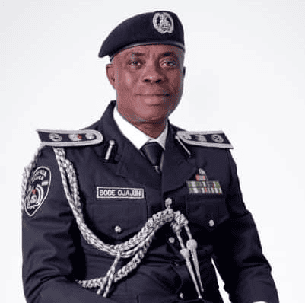
Intelligence, technology driving our fight against crime, he says
CP assures state police’ll complement, not rival existing police
By Tola Gbadamosi
The Ogun State Commissioner of Police, Olabode Ojajuni, has disclosed that intelligence gathering, technology and joint operations with other security agencies have enabled the command to arrest no fewer than 88 crime suspects and rescue victims across the state.
Ojajuni, who spoke in an exclusive interview with WEEKEND HOPE, said the command had adopted a proactive approach to security by studying crime patterns, anticipating threats and deploying intelligence and technology to disrupt criminal activities.
He said the police could no longer afford to wait for criminals to strike before responding, stressing that officers must always stay ahead of perpetrators.
“Our success depends on several factors: studying the crime pattern, availability of operational assets, technology, intelligence, commitment, professionalism and training of personnel.
“As police officers, we are expected to think ahead of criminals. We are trained to anticipate threats and act proactively,” he said.
The commissioner disclosed that a recent joint operation, ‘Operation Kosaye’, involving the Lagos and Ogun State police commands, targeted criminal hideouts in forest areas stretching from Lagos through Ogun towards the Oyo axis.
According to him, the operation resulted in the destruction of criminals’ camps, the arrest of 88 suspects and the rescue of kidnapped victims.

He said personnel from the Amotekun Corps, vigilance groups and hunters also participated in the operation, which received the support of the Lagos and Ogun state governments.
Ojajuni explained that the operation was designed to deny criminals the opportunity to exploit the border areas between Lagos and Ogun as safe havens.
He said, “We are not allowing criminals to take advantage of the border areas to establish camps from where they can operate in one state and escape into another.”
The CP identified kidnapping as a major security challenge, saying the huge financial gains associated with ransom payments had made the crime attractive to criminals.
He, however, said the command had recorded notable successes in rescuing victims and apprehending suspects.
Ojajuni cited the rescue of kidnapped students in Ogun as an example, saying one of the operations received helicopter support following the intervention of Governor Dapo Abiodun.
He said the victims were rescued without any ransom being paid.
He added that another incident involving five kidnapped students also ended with their prompt rescue.
According to the commissioner, intelligence remained central to the command’s anti-kidnapping strategy, with the police maintaining close contact with communities to obtain information about criminal activities.
“Once we receive actionable intelligence, we act on it. We do not just collect intelligence; we process it and use it to prevent crime and arrest those responsible,” he said.
He added that suspects arrested in connection with crimes were prosecuted to ensure justice and deter others.
Ojajuni also disclosed that the Nigeria Police Force had a central technical structure in Abuja that provided specialised support to state commands when required.
He said specialised personnel and departments were deployed to analyse intelligence, provide technical assistance and make equipment available for operations.
“These mechanisms are helping us in the fight against kidnapping and I believe we are winning,” he said.
On inter-agency collaboration, the commissioner said the command worked closely with the Army, Nigeria Security and Civil Defence Corps and other security agencies through joint operations, regular meetings and coordinated strategies.
He said the collaboration had strengthened the state’s capacity to respond to emerging security threats.
On the agitation for state police, Ojajuni said the proposed structure should be viewed as a complement to the Nigeria Police Force rather than a rival.
He said he was privileged to have served as secretary of the State Police Steering Committee established when the Inspector-General of Police, Olatunji Disu, assumed office.
According to him, the committee developed a framework that was subsequently presented to the National Assembly.
“State police should complement the existing structure. It should not be seen as a rival to the Nigeria Police Force,” he said.
Ojajuni, a former Deputy Commissioner of Police in charge of the Criminal Investigation Department in Ogun, said his previous experience in the state had given him a good understanding of its security terrain.
He identified cultism and land grabbing as some of the challenges confronting the state, while noting that advocacy, sensitisation and enforcement had contributed to a reduction in sexual offences and ritual killings.
The commissioner urged police officers to remain disciplined, patriotic and professional, warning them against extortion and corruption.
“Do not demand money for bail. Avoid actions that can create a chain reaction and damage your career,” he warned.
He said officers should always remember that their conduct while in service would determine the reputation they carried after retirement.
“At the end of the day, remember that one day you will retire.
“Your reputation will follow you after service.
“So, serve with integrity, discipline and professionalism,” Ojajuni counselled.